
Granite Bay & Greater Bay Area
Bat Removal and Exclusion in Granite Bay, CA
Ace Ventura Pest & Wildlife Control helps evaluate bat activity around Granite Bay attics, rooflines, vents and other protected building areas.
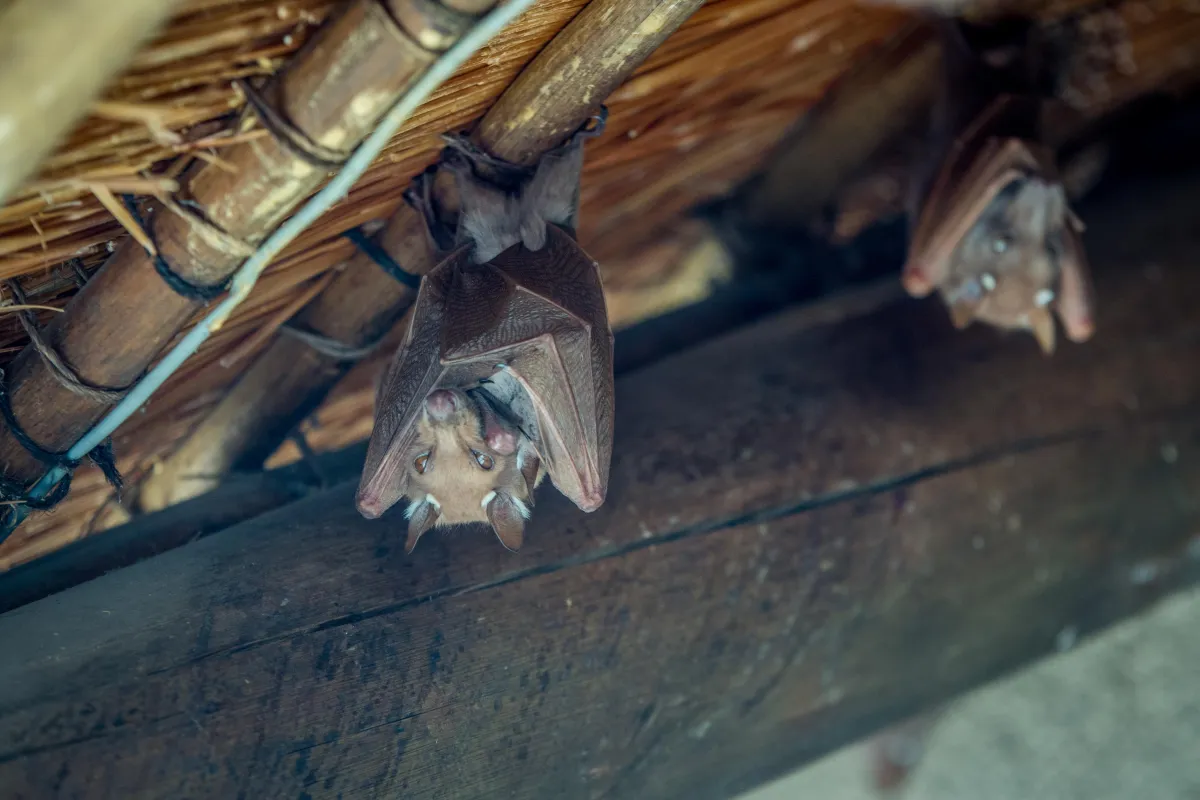
Finding Roosts and Building Openings
Helping Identify How Bats Are Using Your Property
Inspect Common Bat Areas
We inspect accessible attics, rooflines, vents, eaves and exterior openings for bat activity, droppings and possible roost locations.Evaluate Entry and Exit Routes
We assess accessible gaps and flight activity to determine how bats may be entering and leaving the structure.
Service Planned Around the Roost
Bat Control Focused on Exclusion and Prevention
Develop a Property-Specific Exclusion Plan
We recommend appropriate methods based on the roost location, building conditions, bat activity and presence of dependent young.Help Reduce Future Entry
After bats have properly exited, qualifying openings may be addressed to help reduce renewed access.

A Bat-Aware Approach
Ace Ventura’s 4-Step Bat-Control Process
Inspect
Locate Bat Activity
We inspect accessible areas for droppings, staining, noises, roosting evidence and potential openings.
Assess
Evaluate the Roost
We consider the activity area, building access, seasonal conditions and possible presence of dependent young.
Exclude
Help Bats Exit Properly
When appropriate, suitable exclusion measures are used to allow bats to leave without regaining entry.
Prevent
Address Qualifying Openings
We provide applicable sealing, screening, monitoring and property-maintenance recommendations.

"Ricky was knowledgeable, professional, and a good communicator. So far, we've seeing an improvement"
— Hannah Ochs
Bat Control FAQs
1. Do you provide bat control in Granite Bay?
Yes. Ace Ventura Pest & Wildlife Control evaluates qualifying bat activity throughout Granite Bay and the Greater Bay Area.
2. Why are bats entering my building?
Bats may use small openings around rooflines, vents, eaves, chimneys and siding to access protected roosting areas.
3. What signs may indicate bats?
Possible signs include evening flight activity, scratching noises, droppings, staining and repeated movement around a building opening.
4. Should I touch or capture a bat?
No. Never handle a wild bat directly. Keep people and pets away and contact local animal control when immediate assistance is required.
5. What should I do if a bat is found in a bedroom?
Do not release or handle it until you have contacted local animal control or public-health officials, especially if someone was sleeping in the room.
6. Can bats carry rabies?
Some bats can carry rabies. A bite may be difficult to see, so possible contact should be discussed promptly with a healthcare provider or local public-health agency.
7. Can bat entry points be sealed immediately?
Not always. Sealing an opening while bats remain inside may trap them. The roost and exit routes must be evaluated first.
8. Can bats be excluded when young cannot fly?
Exclusion may need to be delayed when dependent young are present. Timing depends on the inspection findings and applicable wildlife requirements.
9. Will exclusion prevent every future bat problem?
Exclusion can help reduce renewed entry, but new openings or building changes may create future access points.
10. How do I request bat control?
Complete the website form or call +1 916-299-7372.
SAFE SPACES, HEALTHY HOMES
You live worry-free, we handle the pests
Address
8462 Joe Rodgers Rd, Granite Bay, CA, 95746

© 2025 Ace Ventura Pest & Wildlife Control. All rights reserved.